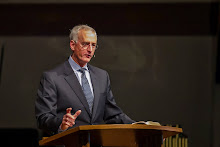
Many of us have been taught that one must never question God. If we experience hardships and heartaches, trails and tribulations, we must simply take our Romans 8:28 pill and suck it up: And we know that for those who love God all things work together for good, for those who are called according to his purpose (Romans 8:28). Of course, the good is rarely alluded to, which is why I think it is a mistake to quote verse 28 without completing the thought in verses 29-30: For those whom he foreknew he also predestined to be conformed to the image of his Son, in order that he might be the firstborn among many brothers. And those whom he predestined he also called, and those whom he called he also justified, and those whom he justified he also glorified (Romans 8:29-30). In other words, the purpose of the “all things work for good” or the explanation of the “good” is that we might become more and more conformed to the image of God’s son, Jesus Christ. To question God is considered “off-limits.” To wonder why God is allowing this difficulty in my life is disrespectful, perhaps even blasphemous. The person who questions God, we are told, does not trust God.
Yet four times in our Psalm 13 David asks the question of God, “How long?” How long, O Lord? Will you forget me forever? How long will you hide your face from me? How long must I take counsel in my soul
and have sorrow in my heart all the day? How long shall my enemy be exalted over me (verses 1-2)?
At least eight other times throughout the psalms, God inspired the writer to record questions that began with “how long?” Numerous other questions are asked of God as to why it seemed as if God were absent from the affairs of his children. Chapter 10 begins with such a question: Why, O Lord, do you stand afar off? Why do you hide yourself in times of trouble (Psalm 10:1)?
We have often reassured ourselves with the promise that God will never leave us or forsake us (Hebrews 13:5), but we have overlooked the fact that God may work in such a way in our lives that it will seem as if he has forsaken and forgotten us.
There are times when it seems as if God has withdrawn himself from us and we are left to struggle to find answers regarding his purposes and intentions in our lives. God does not explain everything to us, but he does communicate sufficiently enough so that we know that we can trust him, even in times of difficulty and doubt.
Monday, August 10, 2009


Thursday, August 6, 2009
THE BIG PICTURE
Check out this blog for some incredible pictures: www.boston.com/bigpicture
I am a little partial to the Tour de France pictures.
I am a little partial to the Tour de France pictures.
Monday, July 27, 2009
Calvin on the Gospel
Gospel Gold From John Calvin
Posted July 25th, 2009 by Tullian TchividjianA friend sent this nugget of gospel gold to me the other day. It comes from a stunning preface John Calvin wrote for Pierre Robert Olivétan’s French translation of the New Testament in 1534. Calvin wrote:
Without the gospel everything is useless and vain; without the gospel we are not Christians; without the gospel all riches is poverty, all wisdom folly before God; strength is weakness, and all the justice of man is under the condemnation of God. But by the knowledge of the gospel we are made children of God, brothers of Jesus Christ, fellow townsmen with the saints, citizens of the Kingdom of Heaven, heirs of God with Jesus Christ, by whom the poor are made rich, the weak strong, the fools wise, the sinner justified, the desolate comforted, the doubting sure, and slaves free. It is the power of God for the salvation of all those who believe.
It follows that every good thing we could think or desire is to be found in this same Jesus Christ alone. For, he was sold, to buy us back; captive, to deliver us; condemned, to absolve us; he was made a curse for our blessing, sin offering for our righteousness; marred that we may be made fair; he died for our life; so that by him fury is made gentle, wrath appeased, darkness turned into light, fear reassured, despisal despised, debt canceled, labor lightened, sadness made merry, misfortune made fortunate, difficulty easy, disorder ordered, division united, ignominy ennobled, rebellion subjected, intimidation intimidated, ambush uncovered, assaults assailed, force forced back, combat combated, war warred against, vengeance avenged, torment tormented, damnation damned, the abyss sunk into the abyss, hell transfixed, death dead, mortality made immortal. In short, mercy has swallowed up all misery, and goodness all misfortune. For all these things which were to be the weapons of the devil in his battle against us, and the sting of death to pierce us, are turned for us into exercises which we can turn to our profit. If we are able to boast with the apostle, saying, O hell, where is thy victory? O death, where is thy sting? it is because by the Spirit of Christ promised to the elect, we live no longer, but Christ lives in us; and we are by the same Spirit seated among those who are in heaven, so that for us the world is no more, even while our conversation [life] is in it; but we are content in all things, whether country, place, condition, clothing, meat, and all such things. And we are comforted in tribulation, joyful in sorrow, glorying under vituperation [verbal abuse], abounding in poverty, warmed in our nakedness, patient amongst evils, living in death. This is what we should in short seek in the whole of Scripture: truly to know Jesus Christ, and the infinite riches that are comprised in him and are offered to us by him from God the Father.
Do your soul a favor and read this over and over and over. It just doesn’t get more nutritious than this!
Wednesday, July 1, 2009
Knowing God
In chapter 2 of J.I. Packer's book, Knowing God, the author speaks to the issue of "Knowing Versus Knowing About." Packer says the following: "We need frankly to face ourselves at this point. We are, perhaps, orthodox evangelicals. We can state the gospel clearly; we can smell unsound doctrine a mile away. If asked how one may know God, we can at once produce the right formula: that we come to know God through Jesus Christ the Lord, in virtue of his cross and mediation, on the basis of his word of promise, by the power of the Holy Spirit, via a personal exercise of faith. Yet the gaiety, goodness, and unfetteredness of spirit which are the marks of those who have known God are rare among us...A little knowledge of God is worth more than a great deal of knowledge about him" (pages 25-26).
"The question is not whether we are good at theology, or 'balanced' (horrible, self-conscious word!) in our approach to problems of Christian living. The question is, can we say, simply, honestly, not because we feel as evangelicals we ought to, but because it is a plain matter of fact, that we have known God, and that because we have known God the unpleasantness we have had, or the pleasantness we have not had, through being Christians does not matter to us? If we really knew God, this is what we would be saying, and if we are not saying it, that is a sign that we need to face ourselves more sharply with the difference between knowing God and merely knowing about him" (page 27).
"The question is not whether we are good at theology, or 'balanced' (horrible, self-conscious word!) in our approach to problems of Christian living. The question is, can we say, simply, honestly, not because we feel as evangelicals we ought to, but because it is a plain matter of fact, that we have known God, and that because we have known God the unpleasantness we have had, or the pleasantness we have not had, through being Christians does not matter to us? If we really knew God, this is what we would be saying, and if we are not saying it, that is a sign that we need to face ourselves more sharply with the difference between knowing God and merely knowing about him" (page 27).
Saturday, June 6, 2009
Sproul: The Only Two Rules of Prayer (theologica.blogspot.com)
 From R.C. Sproul's new book, The Prayer of Our Lord (p. 15):
There are really only two rules that you have to keep in mind when you're in prayer, two things that should drive and govern and control your prayer life with the Almighty.See endorsements and excerpts here.
You should remember who is being addressed and who is doing the speaking.
That is, the first thing you are to remember in prayer is who it is you're talking to, because nothing will condition your prayer life more deeply than remembering that you're in conversation with God, the sovereign Creator and ruler of the universe.
Second, you are to remember who you are. You are not God. You are a creature. So prayer is not a conversation between peers; it is not a fireside chat among equals. This is the creature speaking to his sovereign Creator.
Wednesday, May 20, 2009
O Great God - A Puritan Prayer Put to Music
Words and music by Bob Kauflin
As recorded on Valley of Vision
Lyrics
O great God of highest heaven
Occupy my lowly heart
Own it all and reign supreme
Conquer every rebel power
Let no vice or sin remain
That resists Your holy war
You have loved and purchased me
Make me Yours forevermore
I was blinded by my sin
Had no ears to hear Your voice
Did not know Your love within
Had no taste for heaven’s joys
Then Your Spirit gave me life
Opened up Your Word to me
Through the gospel of Your Son
Gave me endless hope and peace
Help me now to live a life
That’s dependent on Your grace
Keep my heart and guard my soul
From the evils that I face
You are worthy to be praised
With my every thought and deed
O great God of highest heaven
Glorify Your Name through me
© 2006 Sovereign Grace Praise (BMI)
As recorded on Valley of Vision
Lyrics
O great God of highest heaven
Occupy my lowly heart
Own it all and reign supreme
Conquer every rebel power
Let no vice or sin remain
That resists Your holy war
You have loved and purchased me
Make me Yours forevermore
I was blinded by my sin
Had no ears to hear Your voice
Did not know Your love within
Had no taste for heaven’s joys
Then Your Spirit gave me life
Opened up Your Word to me
Through the gospel of Your Son
Gave me endless hope and peace
Help me now to live a life
That’s dependent on Your grace
Keep my heart and guard my soul
From the evils that I face
You are worthy to be praised
With my every thought and deed
O great God of highest heaven
Glorify Your Name through me
© 2006 Sovereign Grace Praise (BMI)
Thursday, May 14, 2009
Sermon Series on Colossians
Since February my fellow-teaching pastor and I have been teaching through the book of Colossians. Just a few moments ago I finished what will be my final sermon in this series. This has been one of my most rewarding preaching series. It has been challenging to my own life as I have reminded myself and our listeners of the centrality of Christ, that he is to be at the very core of our existence. Nothing should take precedence over him in my life and in his church. Do I love him more than life itself? Are there things in my life to which I give greater significance?
I think that our greatest challenge may be to learn to embrace that which matters most to Christ. We have been captivated by the insignificant, even in the name of Christianity. And Christ is not impressed.
He is the image of the invisible God, the firstborn of all creation. For by him all things were created, in heaven and on earth, visible and invisible, whether thrones or dominions or rulers or authorities—all things were created through him and for him. And he is before all things, and in him all things hold together. And he is the head of the body, the church. He is the beginning, the firstborn from the dead, that in everything he might be preeminent. For in him all the fullness of God was pleased to dwell, and through him to reconcile to himself all things, whether on earth or in heaven, making peace by the blood of his cross (Colossians 1:15-20).
I think that our greatest challenge may be to learn to embrace that which matters most to Christ. We have been captivated by the insignificant, even in the name of Christianity. And Christ is not impressed.
He is the image of the invisible God, the firstborn of all creation. For by him all things were created, in heaven and on earth, visible and invisible, whether thrones or dominions or rulers or authorities—all things were created through him and for him. And he is before all things, and in him all things hold together. And he is the head of the body, the church. He is the beginning, the firstborn from the dead, that in everything he might be preeminent. For in him all the fullness of God was pleased to dwell, and through him to reconcile to himself all things, whether on earth or in heaven, making peace by the blood of his cross (Colossians 1:15-20).
Subscribe to:
Posts (Atom)