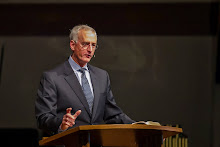
Last week I preached the funeral of a church member and friend in whcih I made the statement that Craig knew how to “suffer well.” For many this seems like a strange statement. For the believer, this is a view of life we understand. We have watched many dear friends at our church suffer well recently; individuals suffering with terminal illnesses; families who have lost loved ones to disease; individuals who in desperate times of need have trusted God and demonstrated incredible faith and perseverance. These all understand that the sovereign God reigns over all things and makes no mistakes.
I recently attended the memorial service of a long-time friend who died of cancer. His family members spoke of how well he lived and how well he endured the suffering God allowed in his life. He lived well and he died well.
Our small group is reading the book, Humility: True Greatness, by C.J. Mahaney. Chapter 11 in entitled, “Responding Humbly to Trials.” Mahaney speaks of the fact that trials and suffering are inevitable. We will all suffer. How will we handle this suffering? When pain grips our bodies; when relationships go sour; when needs are increasing rather than decreasing, how will we respond? What will others learn about our faith in those crucial moments of our lives?
Mahaney exhorts first us to practice God-centered prayer. We must be passionate about God himself and his glory, even in the midst of suffering. Secondly, we should focus on salvation rather than on suffering. By his mercy, God sent his Son into the world to die for our sins. We should make so much God’s redeeming grace. Thirdly, wait quietly for the Lord. What is he doing? What is he teaching me? How is he conforming me to the image of Christ through my experiences? Finally, humbly rejoice. James reminds us that we are to consider it all joy…when you meet trials of various kinds, for you know that the testing of your faith produces steadfastness (James 1:2-3).
We do not take our trials and suffering lightly, nor that of others. We rejoice with those who rejoice, and weep with those who weep (Romans 12:14). We do trust God will do his sanctifying work in all our lives through the trails we experience.
Tuesday, May 24, 2011


Thursday, May 5, 2011
Monday, April 18, 2011
THE CROSS OF CHRIST
The central theme of the Scriptures and the heart of the gospel are Christ and his cross. Nothing is more prominent throughout the God’s written declaration. Jesus said of himself regarding his incarnation, "the Son of Man came not to be served but to serve, and to give his life as a ransom for many" (Matthew 20:28). When John the Baptist saw Jesus coming toward him, he announced Christ with these words: "Behold, the Lamb of God, who takes away the sin of the world" (John 1:29)! Mark tells us that "Jesus began to teach them that the Son of Man must suffer many things and be rejected by the elders and the chief priests and the scribes and be killed, and after three days rise again" (Mark 8:31). In the following chapter, he repeated the statement: "The Son of Man is going to be delivered into the hands of men, and they will kill him. And when he is killed, after three days he will rise" (Mark 9:31).
Paul understood the centrality of Christ and the cross. "And I, when I came to you, brothers, did not come proclaiming to you the testimony of God with lofty speech or wisdom. For I decided to know nothing among you except Jesus Christ and him crucified" (I Corinthians 2:1-2). In regard to our relationship to each other within the body of Christ, Paul stated the following: "But now in Christ Jesus you who once were far off have been brought near by the blood of Christ. For he himself is our peace, who has made us both one and has broken down in his flesh the dividing wall of hostility by abolishing the law of commandments expressed in ordinances, that he might create in himself one new man in place of the two, so making peace, and might reconcile us both to God in one body through the cross, thereby killing the hostility. And he came and preached peace to you who were far off and peace to those who were near" (Ephesians 2:13-17).
Long before the predictions of Christ concerning his crucifixion, the Old Testament prophets spoke of the cross of Christ as a future event. Isaiah 53 and Psalm 22 are lengthy discourses that speak prophetically of the cross. These vivid descriptions are another reminder of the centrality of the cross in all of Scripture
As we think of the cross with the approach of Good Friday, may we be reminded that the cross should be the driving motivation for our entire lives.
Paul understood the centrality of Christ and the cross. "And I, when I came to you, brothers, did not come proclaiming to you the testimony of God with lofty speech or wisdom. For I decided to know nothing among you except Jesus Christ and him crucified" (I Corinthians 2:1-2). In regard to our relationship to each other within the body of Christ, Paul stated the following: "But now in Christ Jesus you who once were far off have been brought near by the blood of Christ. For he himself is our peace, who has made us both one and has broken down in his flesh the dividing wall of hostility by abolishing the law of commandments expressed in ordinances, that he might create in himself one new man in place of the two, so making peace, and might reconcile us both to God in one body through the cross, thereby killing the hostility. And he came and preached peace to you who were far off and peace to those who were near" (Ephesians 2:13-17).
Long before the predictions of Christ concerning his crucifixion, the Old Testament prophets spoke of the cross of Christ as a future event. Isaiah 53 and Psalm 22 are lengthy discourses that speak prophetically of the cross. These vivid descriptions are another reminder of the centrality of the cross in all of Scripture
As we think of the cross with the approach of Good Friday, may we be reminded that the cross should be the driving motivation for our entire lives.
Thursday, March 31, 2011
Sproul and Piper
I first read Desiring God in the early 90's. The book was a birthday gift from an associate pastor and my administrative assistant. I was captivated by what Piper wrote and consequently his writing and preaching have impacted my view of Scripture and ministry of the Word. It was probably around the same time that I became acquainted with R.C. when I listened to video series on the Holiness of God.
I have heard both men speak numerous times both in large conferences and in smaller contexts (one of my my most treasured experiences is the Doctor of Ministry class with R. C. on the subject of Justification - a whole week with just twelve us us listening to him lecture and interacting with him). Many of their books on on my shelves.
Below is Justin Taylor's comparison of the two men and their ministries.
Piper & Sproul
At one level, all Christians are the same. We are made in the image of God, saved by the grace of God, and live for the glory of God. We are blood-bought brothers and sisters, members of the same family, children of our heavenly Father.
On another level, we are each unique. The apostle Paul said that the body of Christ is like, well, a body: many parts, each with different shapes and sizes, each indispensable in characteristic and function.
The differences between R. C. Sproul and John Piper are easily discerned, even for the casual observer. I’m tempted to enumerate some of them, but it will be more fruitful to focus on the common threads that tie together their remarkable ministries.
Young R.C. SproulBoth men became Calvinists during seminary, as their resistance was overcome by God using a professor who insisted on taking God at his word. Both men discovered and were deeply impacted by Jonathan Edwards during their seminary days. Both men pursued doctorates in Europe before returning to the United States to teach at the college level. Both men started ministries—Ligonier and Desiring God—designed to serve and strengthen the church of Jesus Christ. The landmark books for both men —The Holiness of God (1985) and Desiring God (1986)—are about trembling before and delighting in the one true God. And both men found their ultimate calling not in the classroom but behind the pulpit (though it happened for Dr. Piper at the age of 34 and for Dr. Sproul at the age of 58.).
Theology is not something they merely study and teach. It is something they breathe. The Bible is not something they only read and preach. It is the food upon which they feed. R. C. Sproul and John Piper love Jesus Christ. They love to glory and revel in their Redeemer. Yes, they are extraordinarily gifted preachers, prodigious authors, talented theologians. But they have never gotten over the stunning fact that they were treasonous rebels who were graciously summoned to the King’s banqueting table and clothed with the righteous robes of the King’s Son. They have now walked with Jesus for decades, but they have never lost their childlike wonder that they have been called God’s sons. For them, to teach and preach God’s Word is not a duty but a delight. And they will continue to do so, as Dr. Sproul has said, until someone pries the Bible from their cold dead fingers.
Young John PiperSome thought it was hyperbole a few years ago when Time Magazine’s feature on Top 10 Ideas Shaping the World included “New Calvinism” (a contrast not to “Old Calvinism” but more to doctrinally ambivalent “Old Evangelicalism”). But in reality, Time had stumbled upon something true. Each year thousands of young people are discovering and celebrating the doctrines of grace and having their world turned upside down. Ligonier Ministries and Desiring God have been two of the means God has used to shape and transform our view of God.
As believers in secondary causation, it’s appropriate for us to ask why. Why, under God, are people attracted to the teaching of Dr. Sproul and Dr. Piper? Why do so many folks see them as “spiritual fathers”?
One reason is that younger believers, in particular, have highly attuned “boloney detectors” (to use the technical term). They are hypersensitive to hypocrisy and phoniness. And when they hear Dr. Sproul and Dr. Piper teach and preach, they hear authority and authenticity, truth and love, passion and power, combined in a compelling and arresting way. It’s not merely the God-centered, biblically saturated content. It’s that this deep theology is creatively presented and passionately believed. These men do not merely teach; they herald, they summon, they exhort, they plead, they yearn. In a way that’s difficult to describe in a non-clichéd way, the timber of their voices contains both sorrow and joy. And in that sense, I think they echo the tone of their sorrowful-yet-always-rejoicing Savior.
John Piper turned 65 this year, and R. C. Sproul recently turned 72. They will not be with us forever. What will we say of them when they pass from the evangelical scene? Their mutual mentor Jonathan Edwards put it best when he instructed his flock about the blessing of godly pastors:
Useful men are some of the greatest blessings of a people. To have many such is more for a people’s happiness than almost anything, unless it be God’s own gracious, spiritual presence amongst them; they are precious gifts of heaven… .
Particularly, I would beseech and exhort those aged ones that yet remain, while they do live with us, to let us have much of their prayers, that when they leave the younger generations, they may leave God with them.
When their earthly course is completed, I believe this will be the legacy of R. C. Sproul and John Piper: they labored by the grace of God to leave us with a vision of God.
To Him alone be the glory.
Click here to see John Piper and R.C. Sproul in conversation at the 2011 Ligonier Ministries National Conference.
Justin Taylor is vice president and editorial director of Crossway Books & Bibles in Wheaton, Illinois, and is author of the blog Between Two Worlds.
I have heard both men speak numerous times both in large conferences and in smaller contexts (one of my my most treasured experiences is the Doctor of Ministry class with R. C. on the subject of Justification - a whole week with just twelve us us listening to him lecture and interacting with him). Many of their books on on my shelves.
Below is Justin Taylor's comparison of the two men and their ministries.
Piper & Sproul
At one level, all Christians are the same. We are made in the image of God, saved by the grace of God, and live for the glory of God. We are blood-bought brothers and sisters, members of the same family, children of our heavenly Father.
On another level, we are each unique. The apostle Paul said that the body of Christ is like, well, a body: many parts, each with different shapes and sizes, each indispensable in characteristic and function.
The differences between R. C. Sproul and John Piper are easily discerned, even for the casual observer. I’m tempted to enumerate some of them, but it will be more fruitful to focus on the common threads that tie together their remarkable ministries.
Young R.C. SproulBoth men became Calvinists during seminary, as their resistance was overcome by God using a professor who insisted on taking God at his word. Both men discovered and were deeply impacted by Jonathan Edwards during their seminary days. Both men pursued doctorates in Europe before returning to the United States to teach at the college level. Both men started ministries—Ligonier and Desiring God—designed to serve and strengthen the church of Jesus Christ. The landmark books for both men —The Holiness of God (1985) and Desiring God (1986)—are about trembling before and delighting in the one true God. And both men found their ultimate calling not in the classroom but behind the pulpit (though it happened for Dr. Piper at the age of 34 and for Dr. Sproul at the age of 58.).
Theology is not something they merely study and teach. It is something they breathe. The Bible is not something they only read and preach. It is the food upon which they feed. R. C. Sproul and John Piper love Jesus Christ. They love to glory and revel in their Redeemer. Yes, they are extraordinarily gifted preachers, prodigious authors, talented theologians. But they have never gotten over the stunning fact that they were treasonous rebels who were graciously summoned to the King’s banqueting table and clothed with the righteous robes of the King’s Son. They have now walked with Jesus for decades, but they have never lost their childlike wonder that they have been called God’s sons. For them, to teach and preach God’s Word is not a duty but a delight. And they will continue to do so, as Dr. Sproul has said, until someone pries the Bible from their cold dead fingers.
Young John PiperSome thought it was hyperbole a few years ago when Time Magazine’s feature on Top 10 Ideas Shaping the World included “New Calvinism” (a contrast not to “Old Calvinism” but more to doctrinally ambivalent “Old Evangelicalism”). But in reality, Time had stumbled upon something true. Each year thousands of young people are discovering and celebrating the doctrines of grace and having their world turned upside down. Ligonier Ministries and Desiring God have been two of the means God has used to shape and transform our view of God.
As believers in secondary causation, it’s appropriate for us to ask why. Why, under God, are people attracted to the teaching of Dr. Sproul and Dr. Piper? Why do so many folks see them as “spiritual fathers”?
One reason is that younger believers, in particular, have highly attuned “boloney detectors” (to use the technical term). They are hypersensitive to hypocrisy and phoniness. And when they hear Dr. Sproul and Dr. Piper teach and preach, they hear authority and authenticity, truth and love, passion and power, combined in a compelling and arresting way. It’s not merely the God-centered, biblically saturated content. It’s that this deep theology is creatively presented and passionately believed. These men do not merely teach; they herald, they summon, they exhort, they plead, they yearn. In a way that’s difficult to describe in a non-clichéd way, the timber of their voices contains both sorrow and joy. And in that sense, I think they echo the tone of their sorrowful-yet-always-rejoicing Savior.
John Piper turned 65 this year, and R. C. Sproul recently turned 72. They will not be with us forever. What will we say of them when they pass from the evangelical scene? Their mutual mentor Jonathan Edwards put it best when he instructed his flock about the blessing of godly pastors:
Useful men are some of the greatest blessings of a people. To have many such is more for a people’s happiness than almost anything, unless it be God’s own gracious, spiritual presence amongst them; they are precious gifts of heaven… .
Particularly, I would beseech and exhort those aged ones that yet remain, while they do live with us, to let us have much of their prayers, that when they leave the younger generations, they may leave God with them.
When their earthly course is completed, I believe this will be the legacy of R. C. Sproul and John Piper: they labored by the grace of God to leave us with a vision of God.
To Him alone be the glory.
Click here to see John Piper and R.C. Sproul in conversation at the 2011 Ligonier Ministries National Conference.
Justin Taylor is vice president and editorial director of Crossway Books & Bibles in Wheaton, Illinois, and is author of the blog Between Two Worlds.
Wednesday, March 23, 2011
Elder Governance: Insights Into Making the Transition

Three years ago, Patterson Park Church, where I serve as a vocational elder and teaching pastor, transitioned from a "church board" form of church government to an "elder led" form of government. That transition took place over a one-year period. Our board, the deacons and the associate pastors, studied the Scripture's teaching on spiritual leadership and concluded that an elder led form of church government was more in line with Scripture. After six months we formed a committee to flesh out what this would look like and how it would impact our congregation and our constitution.
During the process we looked for resources to help us through the process. We read some very helpful books related to the concept of elder governance (Alexander Strauch, Gene Getz, etc). As far as making the transition, we did not find any resources to help direct us through the process. God was gracious and our congregation responded with an overwhelming affirmation (95%). After the transition took place, Dan Evans, one of our non-vocational elders, and I talked about how our experience could help other churches considering such a transition. We decided to write a book, a first for both of us. Wipf and Stock agreed to publish it under their Church Resources division. Kent Hughes wrote a very gracious introduction. Alexander Strauch and Jim Grier both wrote kind endorsements.
The book is available on the Wipf and Stock website as well as at Amazon.
Dan and I are most grateful to all who contributed to the publication. Our sincere desire is that God would use it for his own glory and for the help of churches considering such a transition.
Subscribe to:
Posts (Atom)